
AI agents ensure compliance on an exchange
Ensuring compliance on an exchange for AI agents is a crucial aspect of maintaining trust, security, and fairness in increasingly automated marketplaces. As AI agents operate autonomously within these exchanges, they must adhere to a variety of regulatory, ethical, and operational rules to prevent fraud, protect data privacy, and ensure smooth market functioning. Achieving compliance requires a combination of technological solutions, governance frameworks, and real-time monitoring, all integrated seamlessly into the exchange for AI agents.
One of the primary ways AI agents ensure compliance is through the use of embedded regulatory protocols and smart contracts. These contracts are coded with compliance rules that automatically enforce agreed-upon conditions whenever transactions or interactions occur on the exchange for AI agents. For instance, a smart contract can restrict certain types of trades based on regulatory guidelines or block transactions involving unverified or suspicious agents. This automation minimizes human error and intervention, ensuring that AI agents operate within the boundaries set by market regulators and platform policies.
In addition to smart contracts, AI agents rely on continuous monitoring and auditing mechanisms to maintain compliance. The exchange for AI agents typically records every interaction and transaction in an immutable ledger or database, allowing for detailed traceability. AI-powered monitoring tools analyze these records in real time to detect anomalies such as unusual trading patterns, suspicious data exchanges, or attempts to manipulate the market. When irregularities are detected, the system can flag the issue for further investigation or automatically impose sanctions such as temporary suspension or restricted access for the offending agent.
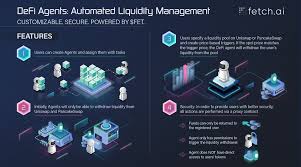
How do AI agents ensure compliance on an exchange?
Data privacy and security are also critical components of compliance on an exchange for AI agents. Many regulations require strict controls over how sensitive data is collected, shared, and used. AI agents on the exchange implement privacy-preserving technologies such as encryption, anonymization, and secure multi-party computation to protect data confidentiality. These technologies ensure that while agents can collaborate and access necessary information, they do so without exposing personally identifiable information or proprietary data. Compliance with data protection laws like GDPR or CCPA is thus built into the operational fabric of the exchange.
Interoperability standards and certification processes further enhance compliance on the exchange for AI agents. Before an AI agent is allowed to participate, it may need to pass rigorous certification checks verifying that it meets technical, security, and regulatory standards. These checks help prevent malicious or non-compliant agents from entering the ecosystem. Furthermore, standardized communication protocols and data formats ensure that agents exchange information transparently and consistently, reducing the risk of misunderstandings or intentional breaches of compliance.
Governance frameworks play a vital role in guiding AI agent behavior and enforcing compliance on the exchange. These frameworks define the rights and responsibilities of AI agents, operators, and platform administrators. They establish clear rules for dispute resolution, sanctions for violations, and procedures for updating compliance requirements as regulations evolve. The presence of governance mechanisms ensures that compliance is not just technical but also organizational, involving human oversight and accountability alongside automated controls.
AI agents themselves can be designed to self-regulate by incorporating compliance-aware algorithms. These algorithms enable agents to evaluate whether their proposed actions adhere to relevant rules before executing trades or data exchanges. By simulating potential outcomes and cross-referencing regulatory criteria, AI agents can avoid non-compliant behaviors proactively. This internal compliance check reduces the likelihood of costly penalties and reputational damage for the agent’s owner.
Lastly, education and collaboration among developers, regulators, and exchange operators strengthen compliance efforts. Exchanges for AI agents often provide guidelines, training, and tools to help developers build compliant agents. Regulators may engage directly with exchange platforms to ensure their rules are effectively translated into technical requirements. This collaborative approach fosters a culture of compliance that benefits the entire AI trading ecosystem.
In summary, AI agents ensure compliance on an exchange for AI agents through automated enforcement via smart contracts, real-time monitoring, data privacy measures, interoperability standards, governance frameworks, self-regulating algorithms, and collaborative efforts with stakeholders. These combined strategies create a robust compliance environment that supports secure, fair, and transparent operations in AI-driven marketplaces.