
A purple team evaluation is a structured cybersecurity exercise where offensive and defensive teams work together in real time to test detection and response capabilities. Instead of isolating attackers and defenders, both sides collaborate during controlled simulations to understand how threats behave inside an environment. The goal is to uncover visibility gaps, validate security controls, and improve incident response efficiency through immediate feedback and continuous tuning of defensive systems during the engagement.
Core structure and scope of evaluation
A typical purple team evaluation is built around realistic attack scenarios mapped to frameworks like MITRE ATT&CK, ensuring each simulated technique reflects real-world adversary behavior. Offensive operators execute controlled actions while defenders monitor logs, alerts, and security tools simultaneously. This structure allows organizations to observe how well their defenses perform under pressure. It also helps identify which attack stages are detected successfully and which phases remain invisible to monitoring systems.
The scope of the evaluation often includes endpoint security, network visibility, identity controls, and cloud monitoring systems. Security teams analyze how data flows through SIEM platforms and whether alerts are triggered correctly. This comprehensive coverage ensures that no critical layer of the environment is overlooked. By validating multiple security domains together, organizations gain a more accurate understanding of their overall defensive maturity and detection capabilities across complex infrastructures.
Key components included in the process
A purple team evaluation typically includes several essential components such as threat simulation planning, detection rule validation, and real-time telemetry analysis. Each component is designed to test how effectively security tools respond to attacker behavior. Teams also examine endpoint logs, authentication events, and network traffic patterns to ensure visibility across all systems. These components work together to provide a complete picture of how security controls perform under realistic conditions.
Another important part of the process is mapping attack techniques to defensive alerts. Security engineers evaluate whether detection rules correctly identify malicious activity or miss critical indicators. This helps prioritize tuning efforts and ensures that monitoring systems evolve alongside emerging threats. The evaluation also includes iterative testing cycles where adjustments are made immediately after each simulated attack phase for continuous improvement.
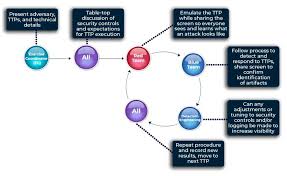
Step-by-step workflow during evaluation
During a purple team evaluation, the workflow follows a structured cycle of execution, observation, and refinement. Offensive testers initiate controlled attack techniques while defenders monitor system responses in real time. After each step, both teams analyze what was detected and what was missed. This immediate feedback loop ensures that weaknesses are addressed on the spot rather than after the engagement ends, improving efficiency and learning outcomes significantly.
This cycle continues through multiple attack stages, allowing teams to progressively refine detection logic and response workflows. Engineers adjust SIEM rules, update alert thresholds, and improve correlation logic based on observed gaps. Over time, this iterative approach strengthens the organization’s ability to detect sophisticated threats and reduces blind spots in security monitoring systems across enterprise environments.
Collaboration and visibility improvements
A purple team evaluation places strong emphasis on collaboration between offensive and defensive security teams. Instead of working independently, both sides share insights during each phase of testing. This transparency helps improve communication, reduce misunderstandings, and align security priorities across the organization. It also ensures that defensive teams gain direct exposure to attacker methodologies in a controlled and educational environment.
This collaborative structure improves visibility across the entire security ecosystem. Teams gain a clearer understanding of how threats move through systems and where detection failures occur. Platforms such as swarmnetics.com often highlight the importance of this unified approach in strengthening modern cybersecurity practices. By combining offensive insight with defensive action, organizations achieve faster improvements in detection engineering and incident response readiness.
Operational and technical elements included
A purple team evaluation also includes technical validation of security tools such as SIEM systems, endpoint detection and response platforms, and cloud security monitoring solutions. Each tool is tested against simulated attack behaviors to determine accuracy and reliability. Analysts review logs, alerts, and correlation outputs to ensure that security events are captured correctly and escalated appropriately when needed.
In addition, identity and access controls are tested to evaluate privilege escalation paths and authentication weaknesses. Network segmentation and lateral movement detection are also assessed to ensure attackers cannot move freely within environments. These technical evaluations help organizations strengthen layered defenses and reduce exposure to advanced persistent threats targeting enterprise systems.
Long-term impact of evaluation results
The outcomes of a purple team evaluation extend beyond immediate improvements, as they provide long-term insights into security maturity. Organizations gain a detailed understanding of where their defenses succeed and where enhancements are needed. This allows security leaders to prioritize investments in tools, processes, and training based on real evidence rather than assumptions.
Over time, repeated evaluations create a continuous improvement cycle that strengthens resilience against evolving threats. Teams become more efficient at detecting, investigating, and responding to incidents. This ongoing refinement ensures that cybersecurity defenses remain adaptive, data-driven, and aligned with real-world adversary behavior across modern enterprise environments.
)