
ground planes play in contract electronic assembly design
Ground planes play a crucial role in contract electronic assembly design, contributing to the overall performance, reliability, and electromagnetic compatibility (EMC) of electronic devices and systems. A ground plane is a conductive layer, typically located on one or more layers of a printed circuit board (PCB), that serves as a reference point for electrical signals and provides a low-impedance return path for current flow. Ground planes play several key roles in contract electronic assembly design, including signal integrity, EMI mitigation, thermal management, and mechanical stability.
One of the primary functions of ground planes in contract electronic assembly design is to ensure signal integrity. Ground planes provide a stable reference plane for signal traces, minimizing signal distortion, and reducing electromagnetic interference (EMI). By sandwiching signal traces between ground planes, manufacturers create controlled impedance transmission lines that maintain consistent signal characteristics and minimize signal degradation due to impedance variations or electromagnetic coupling. This helps preserve signal quality, reduce data errors, and improve the overall performance of electronic devices.
Moreover, ground planes play a critical role in EMI mitigation in contract electronic assembly design. By providing a low-impedance path for electromagnetic currents, ground planes help dissipate and absorb unwanted electromagnetic radiation, reducing the risk of interference with other electronic devices or systems. Ground planes act as shields, blocking electromagnetic fields from propagating to sensitive components or circuits and minimizing emissions from the device itself. Proper grounding techniques, such as connecting ground planes to chassis or earth grounds, further enhance EMI mitigation and ensure compliance with regulatory standards.
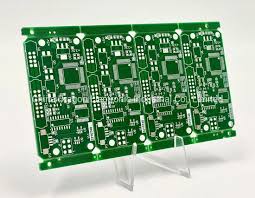
What role do ground planes play in contract electronic assembly design?
Additionally, ground planes contribute to thermal management in contract electronic assembly design. Ground planes act as heat sinks, dissipating heat generated by electronic components and promoting thermal conduction away from sensitive areas of the PCB. By distributing heat evenly across the board, ground planes help maintain optimal operating temperatures and prevent thermal issues such as hot spots, solder joint failures, or component damage. This enhances the reliability and longevity of electronic devices, particularly in high-power or high-temperature applications.
Furthermore, ground planes provide mechanical stability and structural integrity to contract electronic assemblies. By reinforcing the PCB substrate and providing a solid foundation for component mounting, ground planes help reduce board flexing, warping, or vibration-induced stress. This helps prevent mechanical failures, solder joint fractures, and component displacement during assembly, handling, or operation of electronic devices. Ground planes also facilitate proper PCB mounting and ensure alignment with mechanical components such as connectors, heatsinks, or enclosures.
In conclusion, ground planes play a multifaceted role in contract electronic assembly design, contributing to signal integrity, EMI mitigation, thermal management, and mechanical stability of electronic devices and systems. By providing a stable reference plane for signal traces, dissipating electromagnetic radiation, promoting thermal conduction, and reinforcing PCB structure, ground planes help ensure the reliable performance, compliance with regulatory standards, and longevity of contract electronic assemblies. Manufacturers must carefully consider ground plane design and implementation to optimize the performance, reliability, and EMC of electronic devices in various applications.